
Advanced Material Engineering Accelerates Scalable Seawater Uranium Extraction for Energy Security
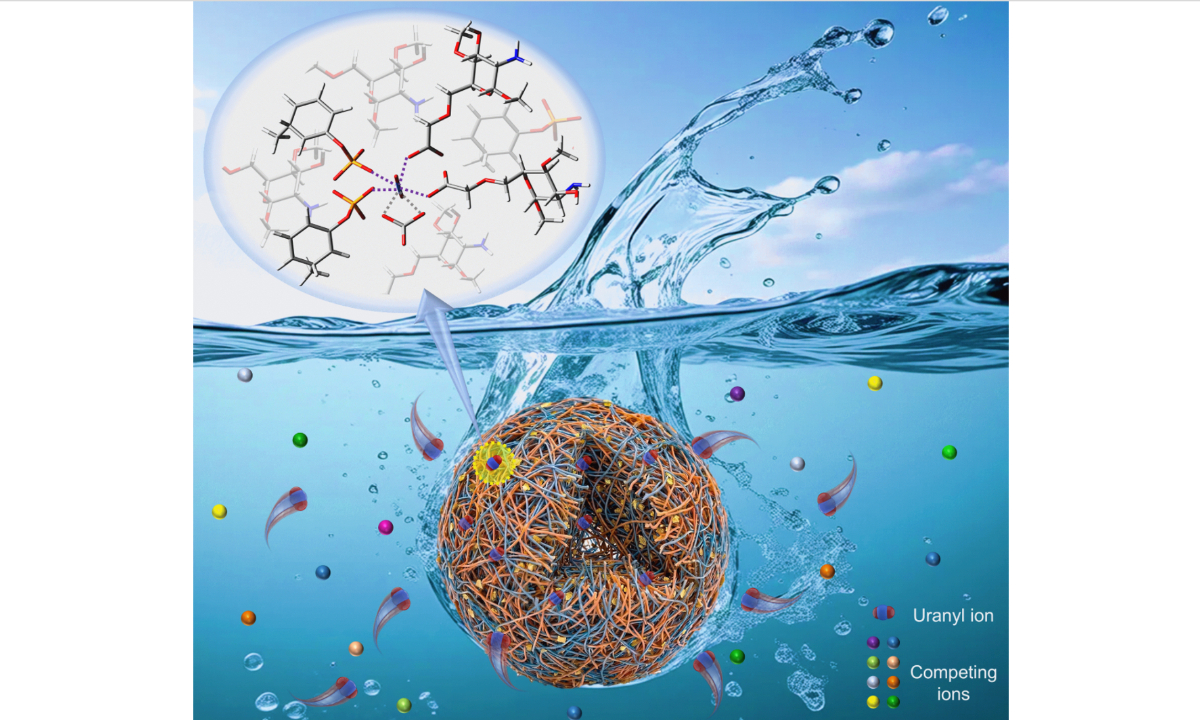
Analyzing this scientific breakthrough by the Qingdao Institute of Bioenergy and Bioprocess Technology under the Chinese Academy of Sciences highlights a crucial technical step toward unlocking non-terrestrial nuclear fuel reserves. From a resource economics and nuclear energy perspective, terrestrial uranium deposits remain geographically concentrated and limited, with global land-based reserves estimated to last under 70 to 100 years at current consumption rates. In contrast, oceans hold approximately 4.5 billion metric tons of dissolved uranium in the form of uranyl ions ($UO_2^{2+}$)—roughly 1,000 times the total land reserves—at an extremely low concentration of 3.3 milligrams per metric ton (3.3 ppb). Developing robust adsorbents that combine high selectivity, fast kinetic rates, and antifouling properties addresses the core economic bottlenecks of marine uranium harvesting.
The performance metrics achieved by the newly engineered PhosCage and AC-POC composite aerogel microspheres demonstrate extraordinary laboratory and field efficacy. Under controlled laboratory testing, the initial PhosCage material reached chemical adsorption equilibrium in just 5 minutes, demonstrating ultra-fast reaction kinetics compared to traditional amidoxime-based adsorbents that require days to saturate. In real seawater samples, PhosCage recorded a peak static extraction capacity of 50.4 milligrams per gram of adsorbent—representing an 840 percent increase over the standard benchmark of 6.0 milligrams per gram set by the US Department of Energy.
To bridge the gap between microscopic chemical synthesis and macro-scale marine engineering, researchers cross-linked PhosCage with high-strength aramid nanofibers, producing mass-producible double-network AC-POC aerogel microspheres. The resulting interconnected porous architecture maximizes active site exposure while offering high mechanical integrity. In open ocean trials lasting 15 days, AC-POC achieved a dynamic extraction yield of 22.55 milligrams of uranium per gram—outperforming the US Department of Energy baseline by 380 percent. Additionally, the microspheres maintain a negatively charged surface potential that repels marine bacteria, preventing biofouling and biofilm buildup by over 70 to 80 percent, which preserves structural lifespan and extraction efficiency over prolonged marine immersion cycles.
Reporting from outlets like People's Daily emphasizes how advanced materials science supports long-term national energy independence and clean energy transitions. Commercializing oceanic uranium extraction provides a virtually limitless fuel supply for nuclear power generation, insulating power grids against land-based supply chain disruptions and geopolitical trade barriers. Lowering adsorbent production costs while extending operational reuse cycles directly reduces capital expenditures, bringing estimated extraction costs down closer to the market viability threshold of 100 to 150 USD per kilogram of yellowcake.
To advance ocean-based uranium capture toward full industrial feasibility, research institutions and industrial partners should prioritize several key developmental steps. First, engineering teams must scale up continuous automated production lines for AC-POC aerogel microspheres to ensure unit manufacturing costs remain low. Second, marine engineers should design scalable off-shore harvesting platforms, such as floating buoyant cages or integrated wave-driven flow-through systems, to maximize volumetric seawater contact rates without incurring high pumping electricity costs. Finally, developing eco-friendly chemical elution processes that strip bound uranium without degrading the aerogel framework will enable multi-cycle deployment, ensuring each batch of adsorbent achieves dozens of reuse cycles with minimal capacity loss.
News source: https://peoplesdaily.pdnews.cn/china/er/30053076164
Reserve Your Numbered Edition.
Each Gremir release is capped at 500 units. 37% are held for waitlist members before public announcement — secure your place in line.