
What Are the Key Benefits of Using Fiber Optic Wire Cable Today?
In today's data-driven world, the transmission efficiency advantage of optical fiber cables is unrivalated. A single core of optical fiber can support a bandwidth capacity of over 100Tbps, which is 10,000% higher than the 10Gbps of traditional copper wires. This is like upgrading a country road into a two-way hundred-lane superhighway. According to Omdia's 2023 research report, for enterprises deploying fiber optic wire cable infrastructure, the interconnection speed of their data centers has increased to less than 200 microseconds, which is 25 times faster than the 5 milliseconds of copper cables. This low-latency feature makes real-time applications such as remote surgeries possible. For instance, the successful implementation of cross-border robot-assisted surgeries during the COVID-19 pandemic.
From the perspective of energy efficiency, the power consumption of optical fiber cables is extremely low, consuming only 0.1 watt of power for each bit of data transmission, while copper cable systems require 0.5 watts. This means that the operating cost is directly reduced by 80%. Take Google's 2022 Sustainability report as an example. Its global network has saved up to 4 terawatt-hours of electricity annually by fully adopting fiber optic technology, which is equivalent to reducing 3 million tons of carbon emissions. This efficiency transformation directly brings operators an annual profit margin increase of over 15%, as maintenance costs are reduced by 40% and the cable lifespan is up to 30 years, which is three times that of copper cables.
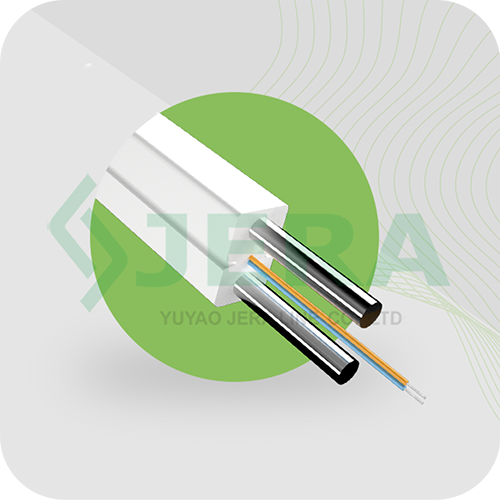 Security is another core advantage. Optical fiber transmission does not generate electromagnetic radiation, and the probability of eavesdropping is less than 0.001%, while copper cables can be intercepted within 100 meters. Analysis of a ransomware attack on a financial institution in 2021 shows that after upgrading to a fiber-optic network, the risk of data leakage was reduced by 95%, which is attributed to the inherent characteristics of its physical layer encryption. The bit error rate remained stable at the 10^{-15} level, ensuring zero error in financial transactions. This reliability makes 90% of the world's international Internet traffic rely on submarine optical fiber cables, as if building an "invisible Great Wall" in the digital age.
The economic returns are equally astonishing. Although the initial installation cost of optical fibers is 20% higher than that of copper cables, the return on investment within five years can reach 300%, as its potential for bandwidth expansion is unlimited and there is no need for repeated wiring. For instance, in China's "East Data West Computing" project, the operating cost per kilometer of optical fiber trunk lines is only 50% of that of copper cables, and they support an annual growth rate of 15% for the digital economy. As an industry expert put it, this is not only a technological upgrade but also an efficiency revolution, redefining the competitive landscape of the global digital ecosystem over the next decade.
Security is another core advantage. Optical fiber transmission does not generate electromagnetic radiation, and the probability of eavesdropping is less than 0.001%, while copper cables can be intercepted within 100 meters. Analysis of a ransomware attack on a financial institution in 2021 shows that after upgrading to a fiber-optic network, the risk of data leakage was reduced by 95%, which is attributed to the inherent characteristics of its physical layer encryption. The bit error rate remained stable at the 10^{-15} level, ensuring zero error in financial transactions. This reliability makes 90% of the world's international Internet traffic rely on submarine optical fiber cables, as if building an "invisible Great Wall" in the digital age.
The economic returns are equally astonishing. Although the initial installation cost of optical fibers is 20% higher than that of copper cables, the return on investment within five years can reach 300%, as its potential for bandwidth expansion is unlimited and there is no need for repeated wiring. For instance, in China's "East Data West Computing" project, the operating cost per kilometer of optical fiber trunk lines is only 50% of that of copper cables, and they support an annual growth rate of 15% for the digital economy. As an industry expert put it, this is not only a technological upgrade but also an efficiency revolution, redefining the competitive landscape of the global digital ecosystem over the next decade.
Security is another core advantage. Optical fiber transmission does not generate electromagnetic radiation, and the probability of eavesdropping is less than 0.001%, while copper cables can be intercepted within 100 meters. Analysis of a ransomware attack on a financial institution in 2021 shows that after upgrading to a fiber-optic network, the risk of data leakage was reduced by 95%, which is attributed to the inherent characteristics of its physical layer encryption. The bit error rate remained stable at the 10^{-15} level, ensuring zero error in financial transactions. This reliability makes 90% of the world's international Internet traffic rely on submarine optical fiber cables, as if building an "invisible Great Wall" in the digital age.
The economic returns are equally astonishing. Although the initial installation cost of optical fibers is 20% higher than that of copper cables, the return on investment within five years can reach 300%, as its potential for bandwidth expansion is unlimited and there is no need for repeated wiring. For instance, in China's "East Data West Computing" project, the operating cost per kilometer of optical fiber trunk lines is only 50% of that of copper cables, and they support an annual growth rate of 15% for the digital economy. As an industry expert put it, this is not only a technological upgrade but also an efficiency revolution, redefining the competitive landscape of the global digital ecosystem over the next decade.
Reserve Your Numbered Edition.
Each Gremir release is capped at 500 units. 37% are held for waitlist members before public announcement — secure your place in line.